
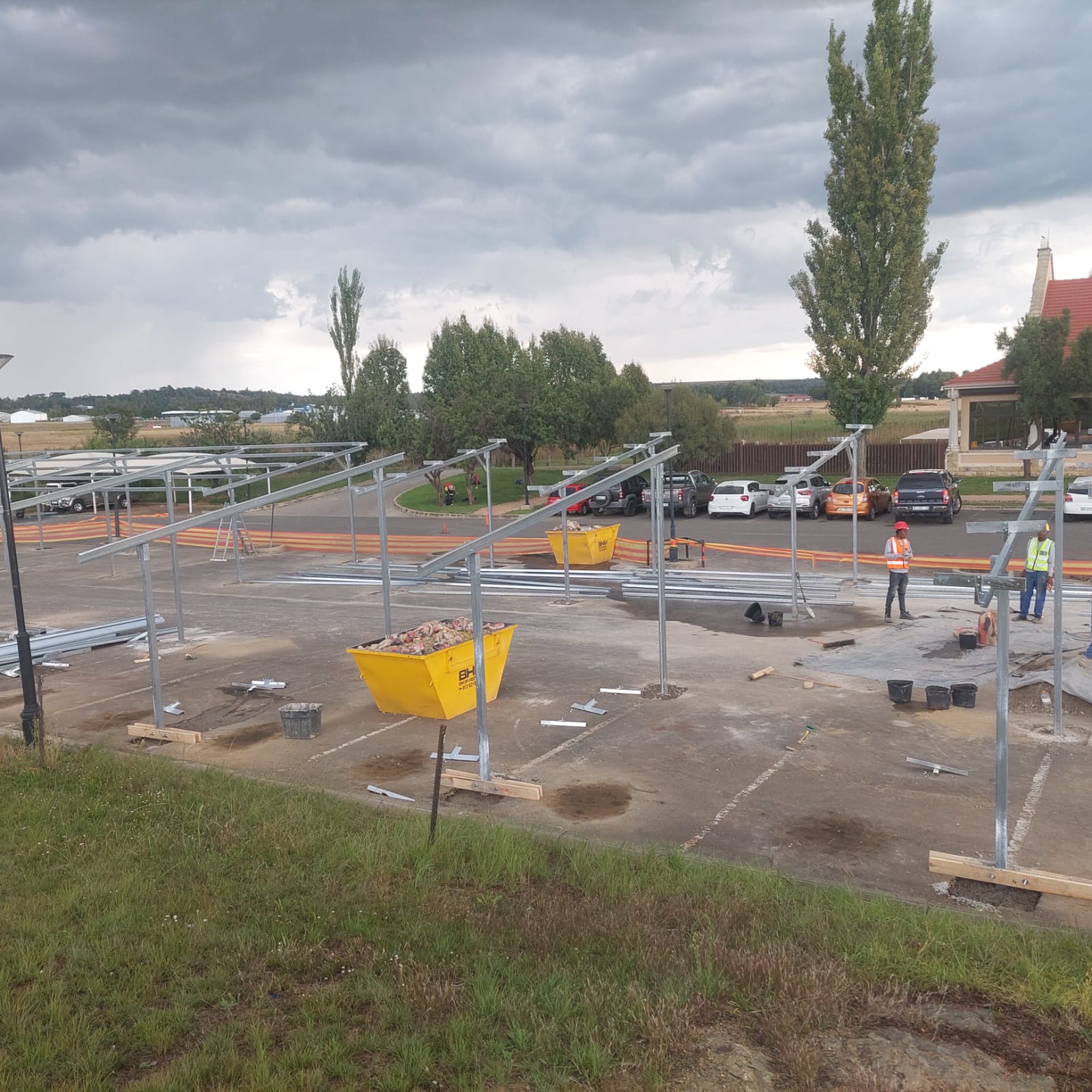
Solar engineering site work

Insights & knowledge centre

Engineering notes on solar, storage and grid compliance

Short, practical explanations of the questions clients ask us most often about commercial solar, battery storage, SSEG registration and solar water treatment in Southern Africa.

Commercial & industrial solar

How tariffs, load profiles and export rules shape the right system size for a business.

Battery energy storage

Where storage creates measurable value, and how duty cycle drives sizing and replacement cost.

SSEG & compliance

Grid registration, protection settings and the documentation inspectors expect.

Articles

C&I solar

Why tariff structure matters more than panel price

Two sites with identical consumption can produce very different business cases. Demand charges, time-of-use windows and fixed components decide how much of your bill solar can actually reach — which is why we start from bills, not from roof area.

C&I solar

Sizing to load rather than to roof

The largest array that fits is rarely the best investment. Where export is restricted or unpaid, production beyond daytime load earns nothing. We size to the consumption curve and test bigger cases in the financial model before recommending them.

BESS

When storage pays, and when it does not

Batteries earn value from three jobs: shifting solar into evening load, reducing demand charges, and avoiding the cost of downtime. If none of those apply meaningfully on your site, storage adds capital cost without a return.

BESS

Cycle life is a commercial number

Depth of discharge and daily cycle count determine how long a battery lasts, so a duty cycle assumption is also a replacement-cost assumption. We state both explicitly in the model rather than quoting a headline warranty year.

SSEG

SSEG registration: plan for it early

Grid-tied embedded generation generally needs municipal or utility registration, an approved inverter, protection settings and a certificate of compliance. Treating it as an afterthought is the most common cause of commissioning delays.

SSEG

What inspectors typically look for

Clear labelling, correct isolation, earthing and surge protection, an accurate single line diagram and test records. A design documented for inspection from the start rarely fails on paperwork.

Solar RO

Solar reverse osmosis for rural water supply

Solar-driven RO works well where demand is daytime-weighted and storage is in the water tank rather than in batteries. Sizing depends on feed water quality, recovery rate and required daily volume.

Solar RO

Water storage instead of battery storage

Pumping and treating into elevated or bulk storage during sunlight hours is usually cheaper than batteries for the same continuity of supply. It also simplifies maintenance in remote locations.

Bankability

What a funder actually reads first

Verified consumption, the production model and its assumptions, then the cash flow. Weak or undocumented assumptions in any of the three slow a review down more than an ambitious return does.

Looking for numbers specific to your site? Run an indicative quote or open the design studio.

Have a question we have not covered?

Send it through — if it comes up often we will write it up here, and we will answer you directly either way.